Want to be in the loop?
subscribe to
our notification
Business News
NEW EXCHANGE RATE POLICY REDUCES DOLLAR SPECULATION
From the beginning of this year, the central bank has applied a new exchange rate mechanism in which it sets a "central exchange rate" or a daily reference rate every day, instead of maintaining a fixed rate for a long period of time. The trading band of the new rate continues to be plus or minus three per cent.
At the discussion, director of the State Bank of Viet Nam's Monetary Policy Department, Bui Quoc Dung said that for the past two weeks after the new policy had been applied, the US dollar/dong central rate has changed flexibly, staying at VND21,917 per dollar by January 15, up VND27 against the end of last year.
However, the rate quoted at commercial banks in the period decreased roughly VND50 to VND60 per dollar against the end of 2015.
He attributed the central rate rise to the impact of the global market including the devaluation of the yuan, a decline in the Chinese securities market and a rise in US dollar value.
Dung said that liquidation in the domestic forex market has been good, with smooth transactions for the past two weeks. He also expected that transactions of the greenback would further ease the next time.
According to Dung, the achievement was notable, especially when the global financial market had seen many consecutive negative changes.
It showed that besides reducing the speculation, the new policy has also helped the forex market to better adapt to external shocks, Dung said.
The little change in the central rate would not cause shocks for the domestic forex market and enterprises, and would allow firms to pay more attention to preventing risks caused by the foreign exchange rate.
At the discussion, banking expert Le Xuan Nghia believed that from now on, foreign currency inflow to Viet Nam would be larger than the outflow, or foreign currency supply would exceed demand if the country could eliminate the dollar speculation.
Nghia also forecast that the devaluation of the dong against the dollar this year would be roughly 3 per cent.
Meanwhile, General Director of HSBC Viet Nam Pham Hong Hai said that the devaluation this year would be roughly 4 per cent, higher than the 1 per cent – 2 per cent rate of the previous year, due to a rising volatility in the global market.
Under the new exchange rate policy, the dollar/dong rate would now be based on the exchange rate changes in the inter-bank foreign exchange market, as well as monetary developments in countries that are involved with Viet Nam's trade, investment and financing, to a major extent.
The daily-adjusted rate was to be in line with the macro-economic balance and would be the basis for local credit institutions and branches of foreign banks to provide their foreign exchange services, it said.
The central bank said that such a mechanism would enable it to ensure its management directives, while letting the exchange rate move flexibly as per global monetary fluctuations.
However, to be able to take appropriate measures under the new policy, besides having to map out new measures such as forward transactions, the central bank must also actively watch the forex market and the impact of domestic and international macro factors on the rate daily.
Source: VIR
Related News
VIETNAM ECONOMY INVESTMENT
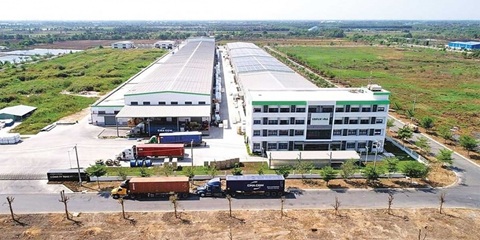
FOREIGN INVESTORS SEEKING A SYNCHRONISED MANUFACTURING ECOSYSTEM
Instead of focusing only on land costs and incentives as usual, foreign investors are seeking a synchronised manufacturing ecosystem, from stable power supply and logistics to shared infrastructure and the convenience of completing residence procedures for experts to serve their long-term investment in the country.
INFRASTRUCTURE / CONSTRUCTION / LOGISTIC / PORT
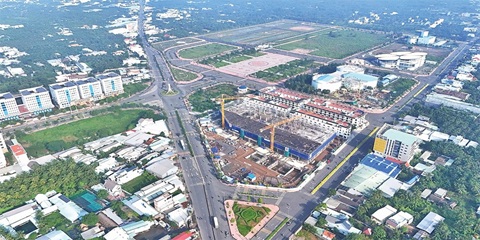
DONG THAP PROVINCE STEPS UP INDUSTRIAL EXPANSION AND INFRASTRUCTURE CONNECTIVITY
Accelerating public investment, strengthening inter-regional connectivity, and expanding industrial land are helping Dong Thap efficiently bolster competitiveness and drive economic growth. Following the 2025 merger of the former Dong Thap and Tien Giang provinces, the expanded Dong Thap province in the Mekong Delta faces mounting pressure to accelerate infrastructure development and strengthen connectivity among local economic zones, urban areas, industrial parks (IPs), and production centres.
PROPERTY / INDUSTRIAL ZONE
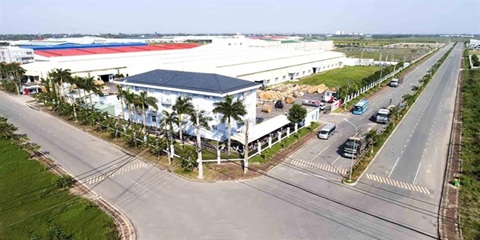
HCM CITY ATTRACTS US$5.7 BILLION INTO EXPORT PROCESSING AND INDUSTRIAL ZONES
HCM City attracted US$5.7 billion in domestic and foreign investment into its export processing and industrial zones during the first nine months of 2026. The figure exceeded the city's full-year target by 31 per cent, highlighting strong momentum in high-quality industrial investment under Resolution No.10-NQ/TW. Total investment reached 131 per cent of the 2026 target of $4.25 billion and represented a 29 per cent increase compared with the same period in 2025, according to the city's Export Processing and Industrial Zones Authority (HEPZA).
BANKING / FINANCE / INSURANCE / TAX
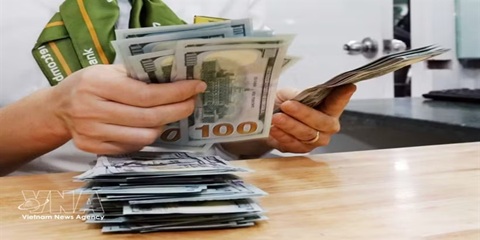
REMITTANCES TO HCM CITY RISE NEARLY 40% IN Q3
Remittances to HCM City reached more than US$2.83 billion in the third quarter of this year, up 39.5 per cent from the previous quarter and 3.6 per cent year-on-year. This was the first quarter showing positive annual growth this year, helping narrow the decline in remittance inflows over the first nine months. According to the State Bank of Vietnam (SBV)’s Regional Branch 2, remittances transferred to HCM City through credit institutions and economic organisations totalled $2.835 billion in Q3, an increase of more than $802 million from the previous quarter.
VIETNAM ECONOMY INVESTMENT
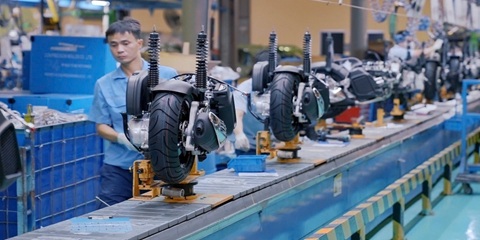
LOCALITIES REPORT BREAKTHROUGH RESULTS IN FDI IN FIRST NINE MONTHS
In Ho Chi Minh City, total registered capital reached $17.2 billion in the first nine months, up 4.2 times from the same period last year. The figure included more than $9.35 billion in newly registered capital and over $4.9 billion in additional capital for existing projects. Foreign investors also registered more than $2.9 billion through capital contributions and share purchases.
TECHNOLOGY
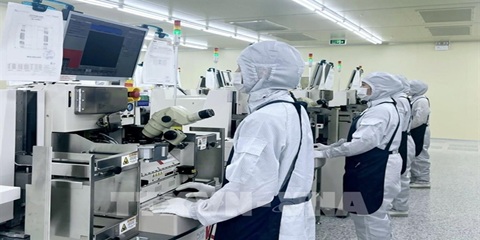
TECH SECTOR GROWTH OPENS UP OPPORTUNITIES FOR VIỆT NAM TO GO GLOBAL
The growth of the electronics, semiconductor and high-tech sectors worldwide is opening up a variety of opportunities for Vietnamese enterprises to integrate more deeply into the global supply chain. However, to become suppliers for these corporations, domestic enterprises must meet rigorous standards regarding quality, technology, productivity and order fulfilment capabilities.
Events Sponsors






















